
Gelco Chimney Sweep in Metairie: A Homeowner’s Guide
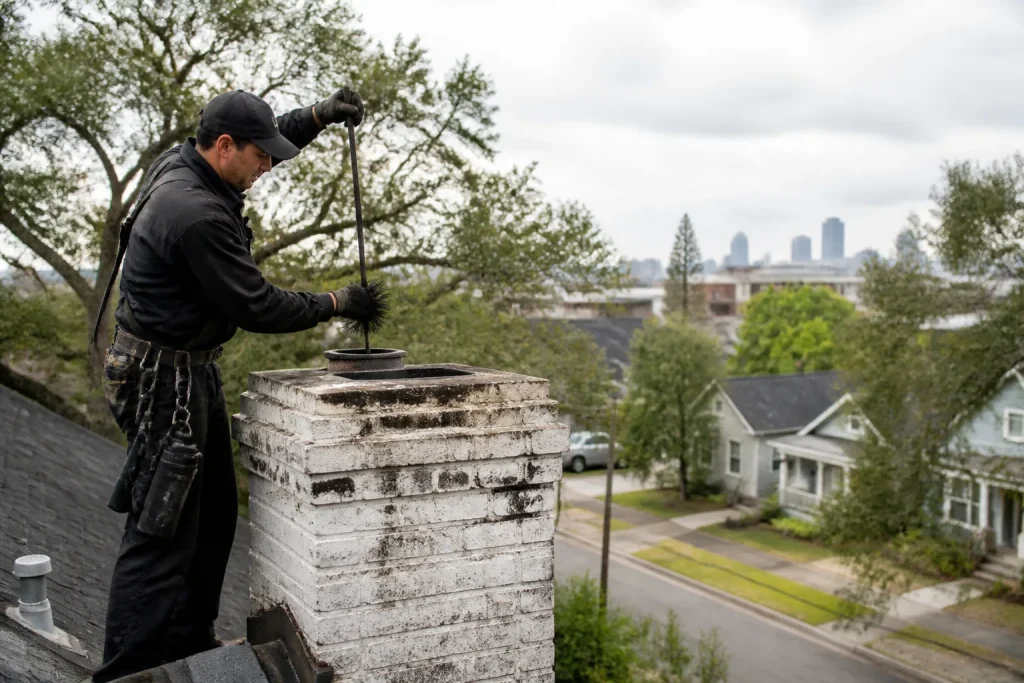
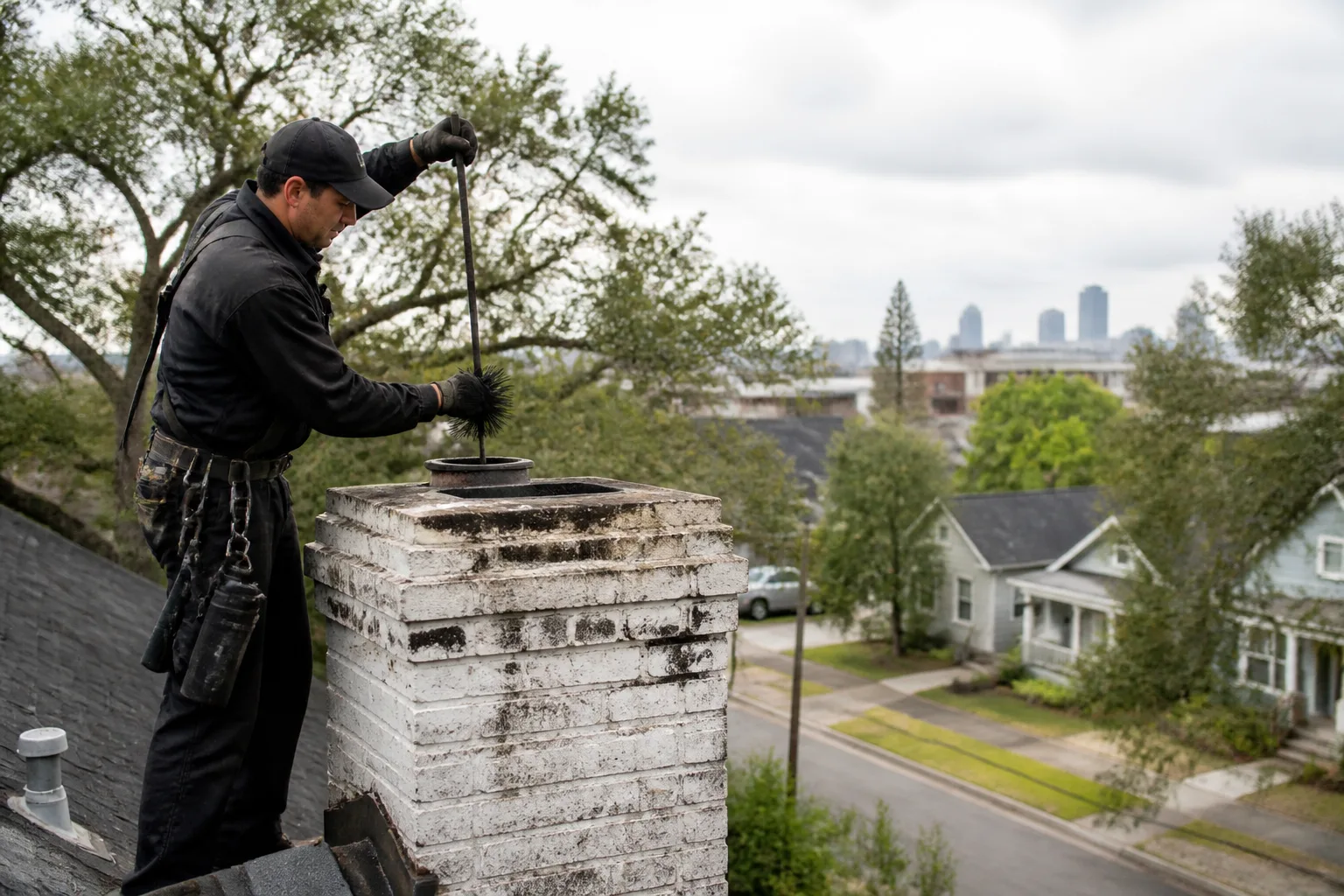
If a chimney sweep shows up to service your Gelco prefab fireplace with a standard brush set, there’s a real chance they’re using the wrong diameter. Gelco fireplaces aren’t masonry, and the flue inside them isn’t a clay tile you can scrub with any old brush. An ill-fitting brush can catch on liner components it was supposed to clean, and pull them loose on the way back down. In our experience around Metairie, that’s one of the most avoidable mistakes we see. This guide tells you what a Gelco unit actually is, what goes wrong with it, and the exact questions to ask before anyone touches it.
What makes a Gelco prefab fireplace different from masonry?
A Gelco fireplace is a factory-built system, not a pile of brick and mortar. It’s assembled from a metal firebox, a prefabricated flue liner, and a termination assembly at the roof, all engineered together as one unit with specific dimensions. That engineering is exactly why it matters who services it.
A masonry chimney is a column of clay tile flue liners inside brick. When sweeping a masonry flue, a technician can use a brush sized to the flue’s nominal dimensions, and if one tile is rough, the brush adapts. A Gelco flue is more precise. The liner stack has a defined inside diameter, and the firebox panels are cast or formed to fit the firebox shell. The brush needs to match that diameter closely: too large and it binds, too small and it leaves soot on the walls.
Two practical differences matter most:
- Cleaning direction and tool type. Prefab fireplaces are often swept from the top down through the termination cap, or from the firebox up, depending on the model and how the flue is run. A technician who assumes masonry and starts swinging a standard brush can damage liner joints.
- Never-brush components. The refractory firebrick panels in the firebox are designed for heat, not abrasion. Brushing them like a masonry firebox wall can crack or chip them, and those panels cost real money to replace.
None of this is a knock on prefab units. A Gelco fireplace, maintained correctly, is a sound and efficient system. The point is that it needs to be treated as what it is.
Gelco failure points a sweep should check every visit
Every prefab system has parts that wear first, and a Gelco unit is no exception. During a sweep, these are the components a competent technician will look at directly, not just the soot load:
- The air-cooled chase cover. Many Gelco installs use an air-cooled design, where the chase cover and the outer wrap allow cool air to move around the flue. The chase cover at the top of the chase is a common weak point. It can rust, warp, or come loose, and if it fails, water gets into the chase and the liner’s insulation gets wet. A wet liner is a lining that has lost much of its job.
- The proprietary termination cap. The cap on top isn’t a generic part. It’s sized and engineered for that specific Gelco model, and it’s what keeps rain, animals, and debris out of the flue. A missing or improvised cap on a prefab unit is a direct route to water damage and nesting.
- Firebrick panel cracking. The refractory panels in the firebox will crack over time with normal use. Some hairline cracks are cosmetic. Others are deep enough to let heat reach the metal firebox shell, which is a real problem. A sweep who doesn’t inspect the panels, or who can’t tell the difference between a cosmetic crack and a structural one, has left the job half done.
- Liner joint separation and gasket wear. The prefab flue sections join together. Those joints can loosen, and the gaskets at the firebox-to-flue connection can degrade. A loose joint is a path for flue gas to get where it shouldn’t.
For a homeowner in Metairie, this list is your checklist the next time a technician is on your roof. If a sweep only mentions the soot and nothing else, ask what they saw at the chase cover and the firebrick panels.
Is your Gelco fireplace still within its serviceable lifespan?
There’s no single date stamp that ends a prefab fireplace’s life. The honest answer is that a Gelco unit stays serviceable as long as its critical components are intact and parts remain available to keep them that way. The question to ask isn’t “how old is it?” but “what condition are the components in?”
Here’s how to think about it, and it’s the same conversation we have with homeowners across Metairie:
- Firebox panels and firebox shell. If the refractory panels are cracked through and the metal behind them is warped or rusted, the firebox is done. Repair usually isn’t economical at that point.
- Flue liner integrity. The liner sections need to be sound and joined correctly. Cracks or separated joints here are serious.
- Chase cover and termination cap. If these can be replaced with the right parts, the fireplace’s usable life extends. If the part is no longer made, that’s a hard constraint.
- Overall installation. Is the unit venting the way it was designed to, or has the chase been modified over the years in ways that leave the liner compromised?
When the firebox itself is failing, the realistic choice is insert replacement rather than repair. That’s a decision best made with an inspection report and photos in hand, not a sales pitch on the spot. And here’s the part many people don’t expect: Gelco is a brand we stock components for, along with Olympia Chimney, Famco, and Copperfield parts for caps, covers, and venting. That means when your Gelco unit needs a cap or a cover, using trade-grade parts built for the system is the standard, not an upgrade.
Gelco parts: what’s still available and what it means for repair decisions
This is the question that catches homeowners off guard. Prefab fireplace brands change hands, and parts lines get discontinued or narrowed over the years. When you’re told a part “can’t be found,” the real question is whether it can’t be found or whether the person on your roof simply doesn’t have a trade account with a supplier who stocks it.
That’s where a company’s supply relationships matter. We carry Gelco, Olympia Chimney, Famco, and Copperfield components for caps, covers, and venting. Olympia Chimney is a professional trade supplier rather than a retail operation, which is the kind of source that keeps discontinued-adjacent parts reachable. When we source a Gelco cap for a Metairie home, we’re working with parts built for the trade, not a hardware-store substitute that gets zip-screwed into place and called a repair.
If a liner has failed on a prefab system, the fix isn’t a new Gelco liner slipped into the old chase in every case. Authorized work with DuraFlex flexible flue liner systems is often the answer: a flexible stainless liner run inside the existing chase, sized and insulated for the appliance. We install DuraFlex, and that matters because it means a sweep who finds a failed liner doesn’t hand you a second company’s phone number. The same visit that finds the problem can address it.
For firebox panels, one more option exists. HeatShield firebox and flue tile restoration coatings are designed to restore cracked refractory panels and flue tiles without a full tear-out. We’re HeatShield-equipped. When the damage is within restoration range, that’s a repair instead of a replacement, and it’s worth asking about before you accept a liner quote.
Questions to ask a sweep before they touch your prefab system
This is the practical part. You don’t need to become a Gelco expert. You need to ask five questions and listen to how the answers come back. Confident answers, in plain language, are what you want.
- “How do you size your brush for a prefab flue?” You want to hear about matching the brush to the liner diameter, and you want to hear that they sweep prefab units differently than masonry chimneys. If the answer is “a brush is a brush,” you have your answer.
- “What do you check besides the soot?” A good sweep names the chase cover, the termination cap, the firebrick panels, and the liner joints. If they only talk about cleaning, they’re doing half the job.
- “Can you source a Gelco cap or cover if mine needs one?” A yes here tells you they deal with trade suppliers. A shrug tells you they’ll improvise.
- “If you find panel cracks, how do you tell cosmetic from structural?” The answer should be about depth, and about what’s behind the crack. There should be no hesitation.
- “Will I get photos of what you find?” In a system where the whole point is hidden components, photos are how you verify the work. Ask before booking, and don’t accept a verbal report only.
If you’d rather not run this quiz on the spot, that’s fine too. Call us at (855) 630-9846 and we’ll talk it through. We answer 24/7. Fast dispatch runs 7am to 7pm.
When to call a pro (and when it can wait)
Your dryer vent is a chimney too, and it deserves the same safety thinking, so if the dryer is running hot or taking two cycles to finish a load, that’s the same kind of job. A Gelco fireplace needs a professional when you see cracked firebox panels, a missing or damaged cap, visible rust or water staining in the firebox, or smoke that doesn’t draw the way it should. And it needs a professional the first time anyone proposes a repair, because that’s when a trained eye at your Metairie home matters.
The reason is simple. A prefab fireplace holds a fire inside a metal box, and the only thing between that fire and your home’s structure is the panel, the liner, and the cap. When those are intact, the system works. When one fails, the failure isn’t always visible from the living room. That’s why we treat an inspection report with photos as the starting point for every repair conversation, and why a technician diagnosing on the spot, not just cleaning, is worth insisting on.
If you’re in Metairie and want a second opinion on a Gelco repair quote, start with a Metairie Chimney Sweep assessment. Related services in Metairie: dryer vent cleaning and chimney sweep appointments, both handled by our own technicians.
The Bottom Line
A Gelco fireplace is a factory-engineered system, and it needs to be cleaned and repaired as one. The brush has to match the flue diameter. The chase cover, the termination cap, the firebox panels, and the liner joints are the parts that fail first and the parts a sweep should check under a flashlight. Parts availability is real, and it depends on the company you call. Our technicians have up to 9 years of experience, and we stock Gelco, Olympia Chimney, Famco, and Copperfield components. If you’re in Metairie and need help, Metairie Chimney Sweep offers free estimates. Call (855) 630-9846. We answer 24/7. Fast dispatch from 7am to 7pm, Sunday through Friday.
Frequently Asked Questions
Not necessarily. Gelco prefab fireplaces need a brush matched to the liner’s specific diameter and a technician who inspects the chase cover, termination cap, firebox panels, and liner joints, not just the soot. Ask about tool sizing and prefab experience before you book. If you’d rather skip the vetting, call (855) 630-9846 for a free estimate.
Once a year is the working rule for a wood-burning fireplace in normal use, and that applies to Gelco units as much as any other. The reason is that the annual visit is also when the firebox panels, liner joints, and cap get inspected. A year is enough time for a hairline crack to become a real one. Call (855) 630-9846 to get on the schedule.
In many cases a compatible trade-grade cap can be sourced through professional suppliers rather than replaced with a retail substitute. This is where the company you call matters: we carry Gelco, Olympia Chimney, Famco, and Copperfield components for caps, covers, and venting. Call (855) 630-9846 and we’ll tell you what’s available for your unit.
Sometimes yes. HeatShield firebox and flue tile restoration coatings are designed to restore cracked panels without a full tear-out when the damage is within restoration range. Deep cracks that expose the metal shell behind them are a different story. The honest answer comes from an inspection with photos you can see for yourself. Call (855) 630-9846 for an assessment.
Most cities require a permit for liner replacement work, so ask your city’s building department before work starts, and ask any contractor you’re considering how they handle permits on prefab liner jobs. It tells you a lot about how the company operates. For liner and repair questions, call (855) 630-9846. Estimates are free.
Written by the team at Metairie Chimney Sweep.
Need Chimney Cleaning Help?
Call Metairie Chimney Sweep - licensed & insured, here with fast help in Metairie.
(855) 630-9846